

BugBountyHunting
Search a community-curated collection of bug bounty writeups and learning resources.
About BugBountyHunting
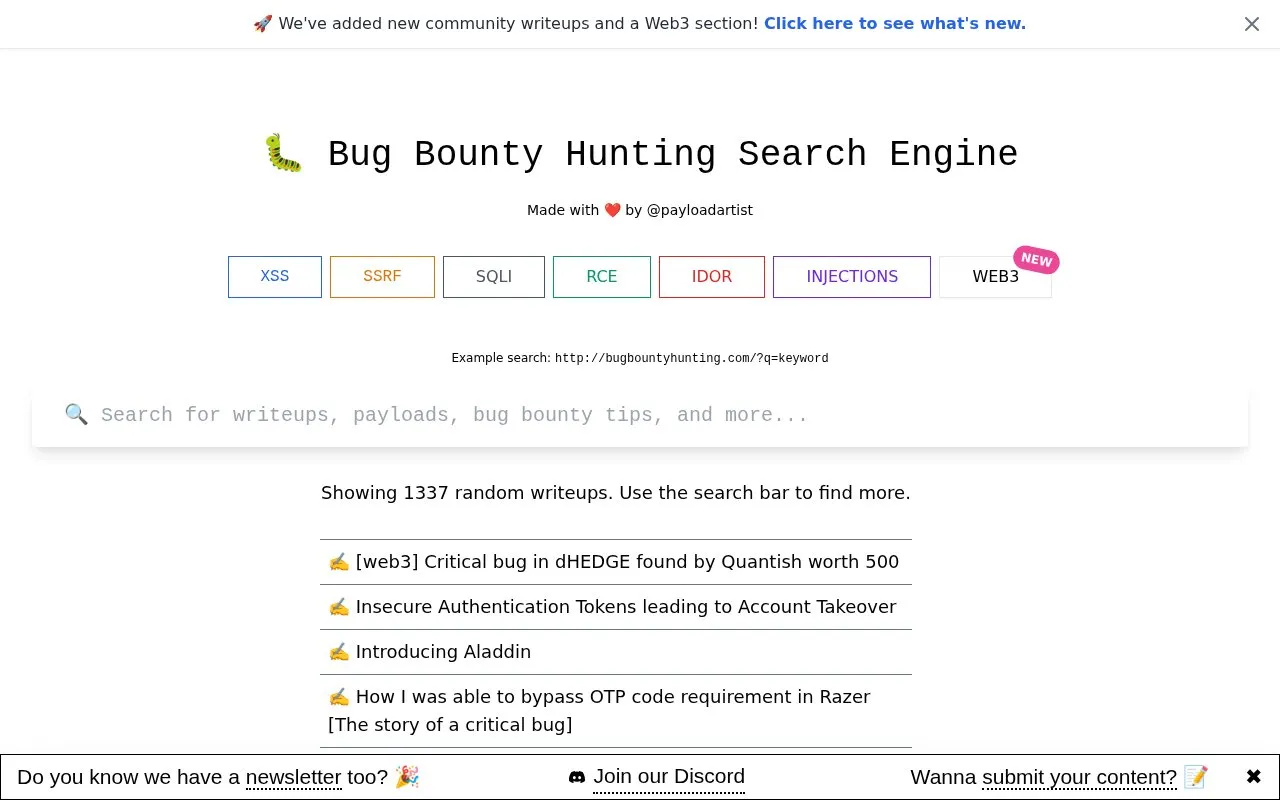
BugBountyHunting.com collects community-curated bug bounty writeups, resources and related content, searchable by keyword using a ?q=keyword format. It organizes content by topics such as XSS, SSRF, SQLi, RCE, IDOR, injections and Web3, and includes FAQ explanations of common vulnerabilities and misconfigurations.
The site accepts community content submissions and mentions a newsletter and Discord for updates. Contact for feedback or concerns is listed via Twitter.
Key features
- Search community-curated bug bounty writeups by keyword
- Browse by categories including XSS, SSRF, SQLi, RCE, IDOR
- Web3 and smart contract security section
- FAQ explanations of common vulnerabilities and misconfigurations
- Accept community-submitted writeups and content
- Newsletter and Discord for updates and discussion
Best for: People learning or practicing bug bounty hunting who want a searchable collection of writeups and basic vulnerability explanations.
Good for
- Searchable collection of community-curated writeups and resources
- Coverage includes common web flaws and a Web3 section
- FAQ section explains common vulnerabilities for those starting out
BugBountyHunting at a glance
- Website
- bugbountyhunting.com
- Category
- Privacy & Security › Security Tools
- Type
- Website
- Pricing
- Not confirmed. Check the site
- Platforms
- Web
- Open source
- Not stated
- Language
- English
- Last checked
- Oct 5, 2026 · Online when checked
- Listed
- Oct 5, 2026
Guides for Security Tools
BugBountyHunting alternatives
Tools and sites you could use instead, ranked by how closely they match.

Browse public bug bounty programs and compare their rewards, scope tags, launch dates, and research opportunities.

This repository collects lists of tools and resources for hackers and security researchers.
Open source
24 alternatives
Browse a curated collection of information security tools, links, and learning resources.
Open source
24 alternatives
Rawsec’s CyberSecurity Inventory catalogs more than 1,700 security tools and resources, helping practitioners browse a curated cybersecurity reference.

Browse this repository’s curated list of cybersecurity and information security resources.

Manage two-factor authentication codes with OTP Auth, an iOS app listed on the App Store.
FreemiumPick
24 alternativesPopular in Security Tools
Well-known listings from the same topic.
Online Password Hash Crackonlinehashcrack.comMD5 reverse lookupmd5.gromweb.comMozilla SSLssl-config.mozilla.orgchallenges.rechallenges.reGoPlus Locker V3gopluslabs.ioWhatsMyDNSwhatsmydns.net


BugBountyHunting FAQ
What is an XSS vulnerability?
Cross-Site Scripting is an injection attack where malicious scripts are inserted into otherwise trustworthy websites. It occurs when a web application uses user input in output without validating or encoding it. Main types are Stored, Reflected, and DOM-based XSS.
What is an IDOR vulnerability?
Insecure Direct Object Reference occurs when a web application or API exposes a reference to an internal object, exposing its identifier and data format. An example is /api/users/:id where changing the id parameter can fetch data belonging to other users.
What is an SSRF vulnerability?
Server-Side Request Forgery lets an attacker read or update internal resources by abusing server features. The attacker supplies or changes a URL the server reads or sends data to, which can expose configuration such as AWS metadata, internal services, or sensitive files.
Is something wrong or out of date?
Tell us and an editor will check it.
Own this website?
Claim this listing
Claim the listing and suggest updates yourself. An editor checks every claim first.