

PubMed indexes citations for biomedical literature from MEDLINE, life science journals and online books, with links to full text when available.
FreePick
24 alternativesGreat PubMed Search helps users find scientific articles indexed by PubMed.
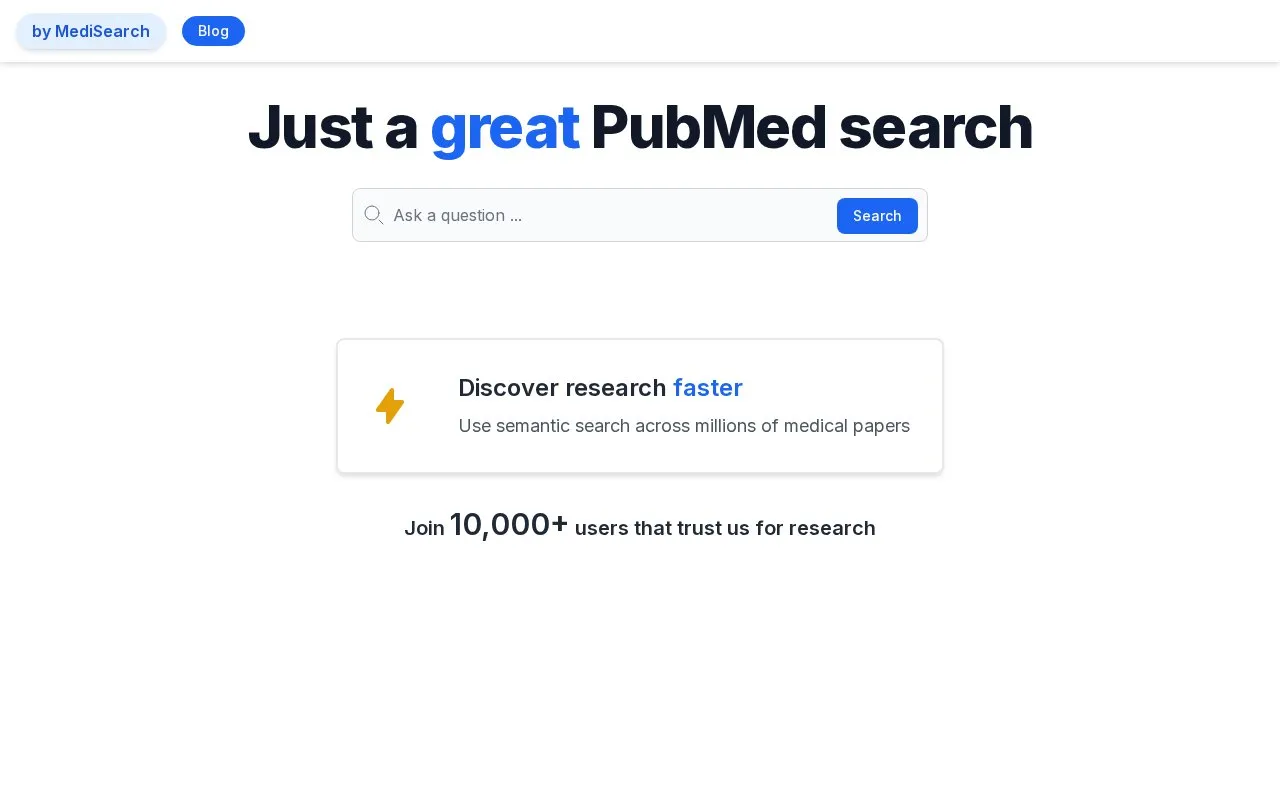
Great PubMed Search helps users find scientific articles indexed by PubMed.
Great PubMed Search is a website in our Academic Papers collection, part of the Research & Data directory. It runs in your web browser, so there's nothing to install.
People usually find Great PubMed Search when they’re looking for academic papers.
Not quite what you need? Close alternatives include PubMed, Google Scholar, and Citrus Search — compare them below.
Tools and sites you could use instead, ranked by how closely they match.
PubMed indexes citations for biomedical literature from MEDLINE, life science journals and online books, with links to full text when available.
Google Scholar searches scholarly literature across articles, theses, books, abstracts and court opinions from multiple disciplines.
Citrus Search helps users find an overview of relevant articles in a research field.
Semantic Scholar searches scientific literature and uses AI to identify relevant papers across fields, with an API for developers.
RePEc indexes economics research, including working papers, journal articles, books, software and related services.
IDEAS indexes economics and finance research, including working papers, articles and software code.
Well-known listings from the same topic.
Tell us and an editor will check it.
Claim the listing and suggest updates yourself. An editor checks every claim first.


