

Predirect automatically redirects selected web links through a browser extension with minimal permissions.
Open source
LibRedirect sends links from popular sites to alternative frontends, including YouTube, Twitter, and TikTok.
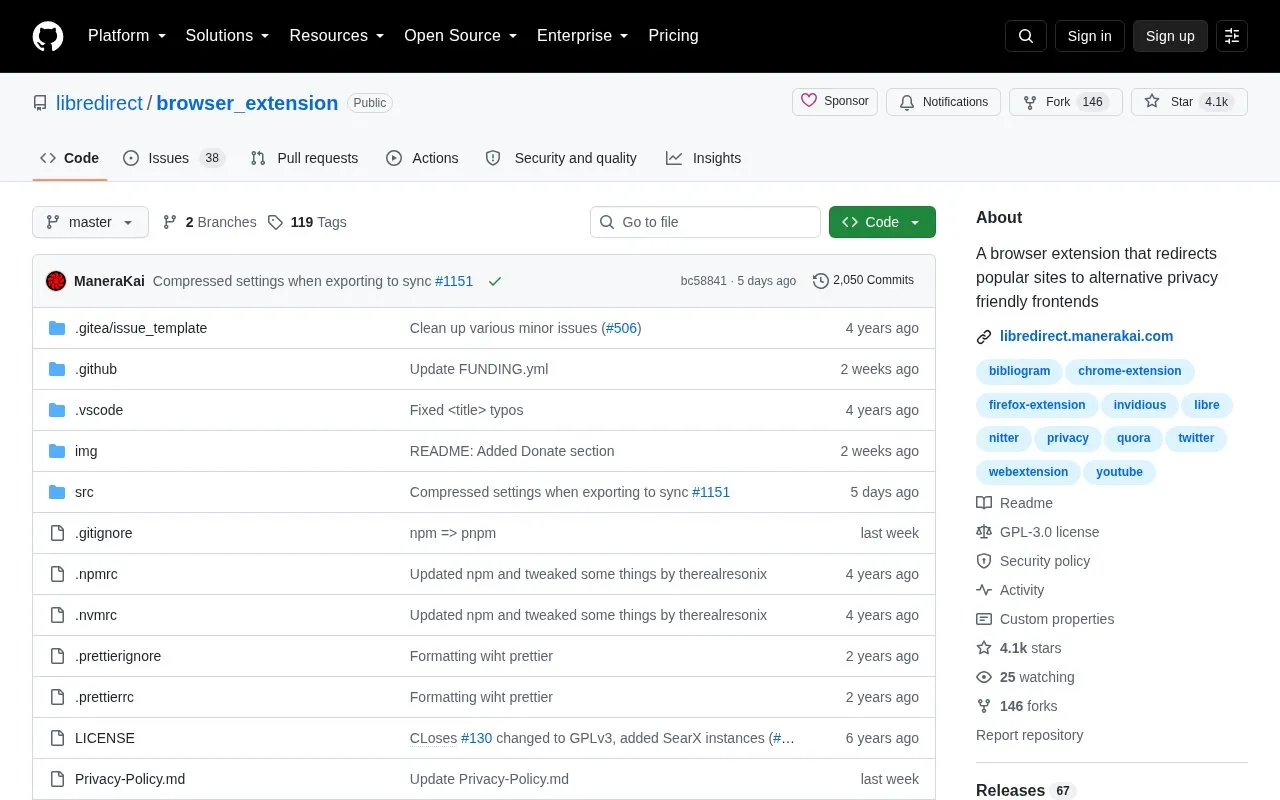
LibRedirect is a browser extension that redirects requests for YouTube, Twitter, TikTok and other popular sites to alternative frontends. The project is open source under a GPL-3.0 license, with source code and development instructions on GitHub.
URL redirections work locally. Exceptions are OpenStreetMap reverse geocoding, which uses the OSM Nominatim API, and the frontend instance list, which is fetched from GitHub by default and can instead use Codeberg or be disabled.
Tools and sites you could use instead, ranked by how closely they match.
Predirect automatically redirects selected web links through a browser extension with minimal permissions.
Follower Bridge finds users followed on X and helps follow those same accounts on another social platform.
Numblr provides an alternative frontend for Tumblr, Twitter, Instagram, AO3, YouTube, and RSS feeds.
Privacy Redirect routes links to privacy-respecting alternative frontends for popular internet platforms.
Proxy Redirect sends links to privacy-respecting proxy frontends, with a notice explaining site usage terms.
This list collects open source alternatives to popular internet frontends, helping users browse services through independent interfaces.
Well-known listings from the same topic.
Tell us and an editor will check it.
Claim the listing and suggest updates yourself. An editor checks every claim first.


