

This Scikit-learn extension accelerates compatible applications through optimized implementations.
Open source
24 alternativesML-Ensemble provides Python tools for high-performance ensemble learning with scikit-learn.
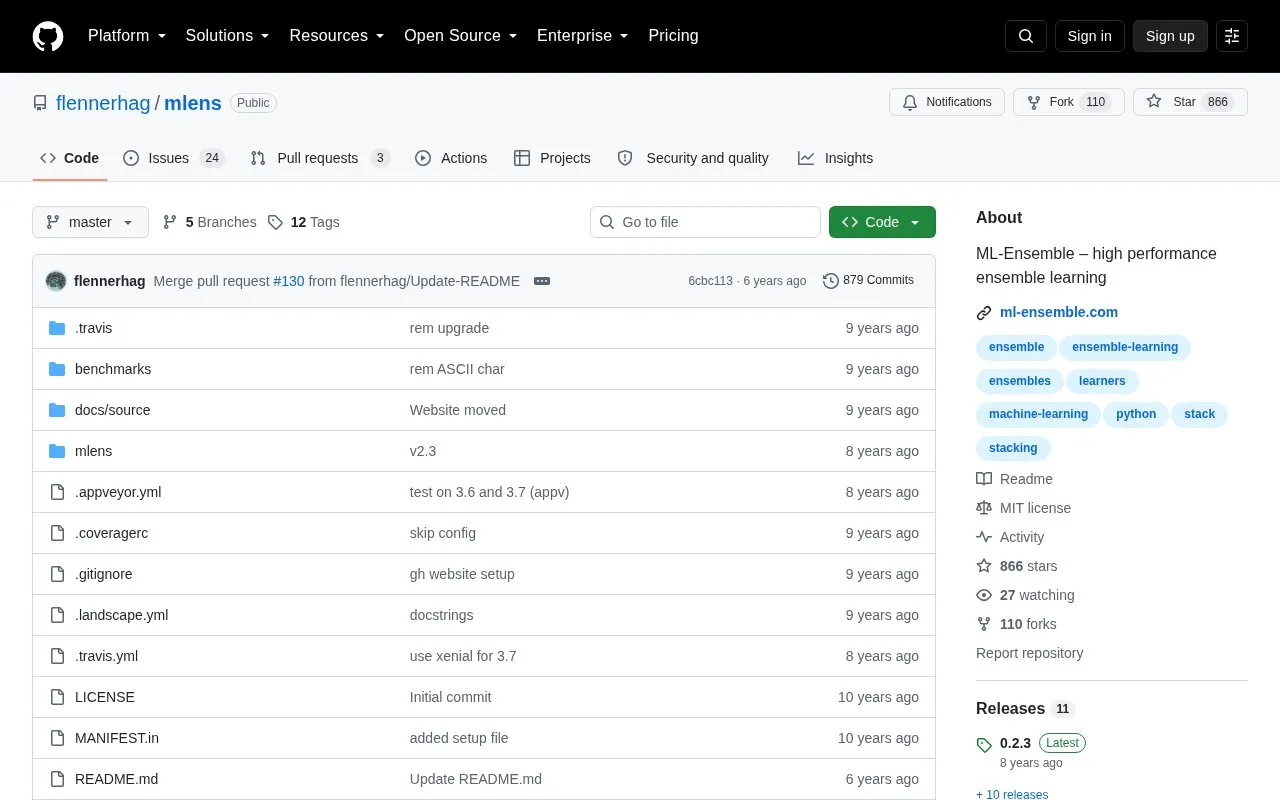
mlens is ML-Ensemble, a Python library for high performance ensemble learning. It combines a Scikit-learn high-level API with a low-level computational graph framework to build memory efficient, maximally parallelized ensemble networks. It is available on PyPI and installs with pip install mlens.
Pricing is not clearly stated.
Tools and sites you could use instead, ranked by how closely they match.
This Scikit-learn extension accelerates compatible applications through optimized implementations.
Use Learnergy, a Python library for training and working with energy-based machine learning models.
Karate Club offers algorithms for unsupervised learning on graph data in Python.
This metric-learn repository contains Python implementations of metric learning algorithms.
metric-learn provides Python implementations of metric learning algorithms.
numpy-ml collects machine learning algorithms in NumPy, presented as an intentionally readable Python package.
Well-known listings from the same topic.
Tell us and an editor will check it.
Claim the listing and suggest updates yourself. An editor checks every claim first.


