

NetBird combines a WireGuard-based overlay network with Zero Trust Network Access for connecting remote users, cloud environments, and edge systems.
Cloudflare Tunnels
Cloudflare documentation explains how Cloudflare Tunnel works in Zero Trust networking.
About Cloudflare Tunnels
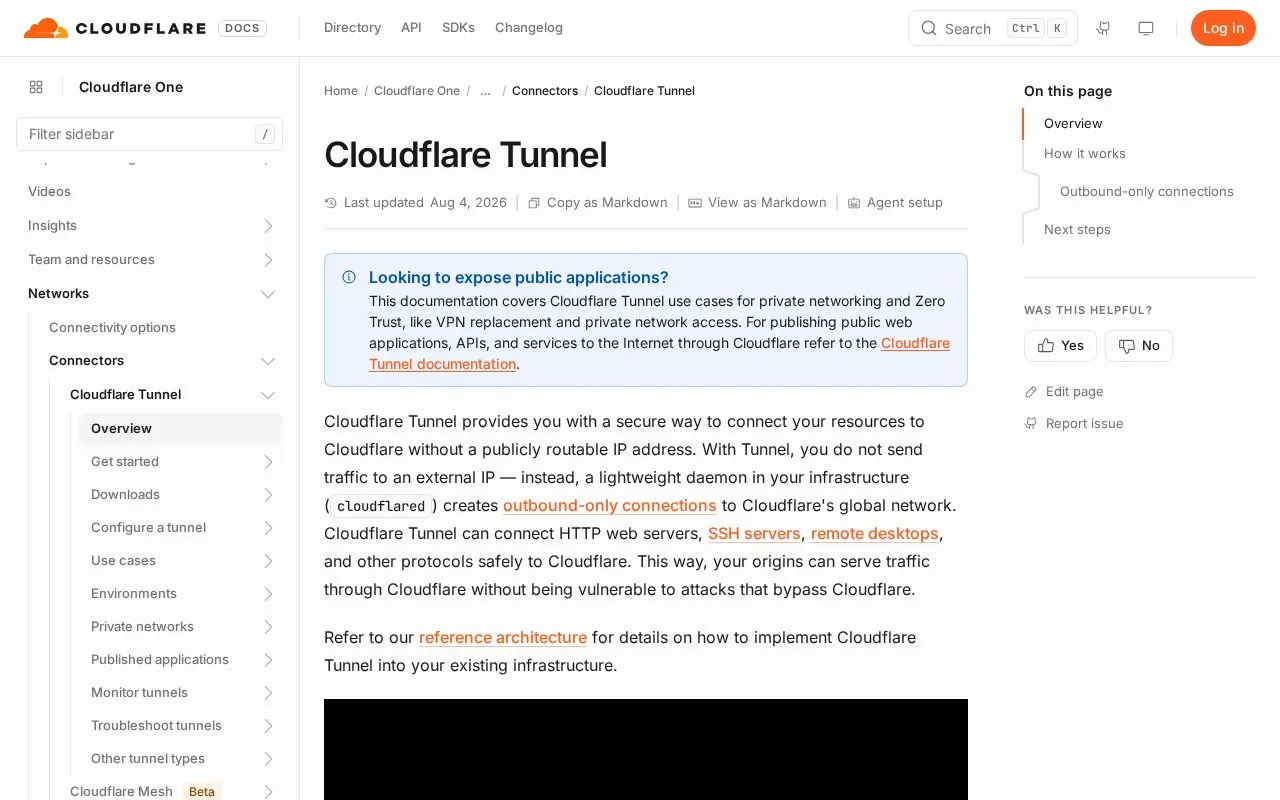
Cloudflare Tunnel is a networking approach documented in Cloudflare One docs for Zero Trust networking. It connects resources to Cloudflare's global network without a publicly routable IP address. A lightweight daemon called cloudflared runs in your infrastructure and creates outbound-only connections to Cloudflare.
You can use it to connect HTTP web servers, SSH servers, remote desktops, and other protocols to Cloudflare. Tunnels are persistent objects identified by a UUID, and you can run multiple cloudflared connectors within the same tunnel. You can create a tunnel using the Cloudflare dashboard or API, download cloudflared, and configure firewalls to allow outbound connections while blocking inbound traffic.
It suits teams and administrators managing private resources and internal networks. The documentation focuses on private networking use cases such as VPN replacement and private network access rather than publishing public web applications.
Key features
- Connect origins without a publicly routable IP address
- Create outbound-only connections with cloudflared daemon
- Connect HTTP servers, SSH, remote desktops and other protocols
- Create and manage tunnels via dashboard or API
- Run multiple cloudflared connectors within one tunnel
- Use for VPN replacement and private network access
Best for: Teams and administrators connecting private servers and internal applications through Zero Trust networking.
Good for
- No publicly routable IP required for origins
- Outbound-only model allows blocking inbound traffic
- Supports HTTP, SSH, remote desktop and other protocols
- Includes reference architecture and setup guidance
Watch out for
- This documentation focuses on private networking, not public apps
- Requires installing and running cloudflared daemon
- Authenticated Origin Pulls has no effect on tunneled hostnames
Cloudflare Tunnels at a glance
- Category
- Privacy & Security › VPNs
- Type
- Website
- Pricing
- Not confirmed. Check the site
- Platforms
- Web
- Open source
- Not stated
- Language
- English
- Last checked
- Oct 6, 2026 · Online when checked
- Listed
- Oct 5, 2026
Cloudflare Tunnels alternatives
Tools and sites you could use instead, ranked by how closely they match.
Connect devices and clouds through ZeroTier’s software-defined networking platform.

The Nebula project provides a scalable overlay networking tool focused on performance, simplicity, and security.
Open source
24 alternatives
VpnHood offers a free, cross-platform VPN described as a tool for circumvention and privacy.
Open source
24 alternatives
This GitHub project bypasses YouTube detection systems that rely on the server name indication (SNI) field.
Open source
24 alternatives
Tailscale provides identity-based Zero Trust connectivity for developers, IT, and security teams across resources and environments.
Popular in VPNs
Well-known listings from the same topic.
WireGuardwireguard.comAmneziaamnezia.orgVPN Jantitvpnjantit.comMullvad VPNmullvad.netDNSCryptdnscrypt.infoShadowmereshadowmere.xyz


Cloudflare Tunnels FAQ
What is Cloudflare Tunnel?
Cloudflare Tunnel connects resources to Cloudflare without a publicly routable IP address using the cloudflared daemon. This documentation covers its use for private networking and Zero Trust.
How does Cloudflare Tunnel work?
cloudflared establishes outbound connections from your infrastructure to Cloudflare's global network. Traffic then flows in both directions over the tunnel, allowing firewalls to block inbound traffic.
What can I connect with Cloudflare Tunnel?
You can connect HTTP web servers, SSH servers, remote desktops, and other protocols. Each tunnel can run multiple cloudflared connectors.
How do I create a tunnel?
You can create a tunnel using the Cloudflare dashboard or API, then download cloudflared to connect your infrastructure. The docs also list useful Tunnel terms and reference architecture.
Is something wrong or out of date?
Tell us and an editor will check it.
Own this website?
Claim this listing
Claim the listing and suggest updates yourself. An editor checks every claim first.