
33mail creates private email aliases that forward messages to an existing inbox and lets users deactivate addresses or reply anonymously.
SimpleLogin
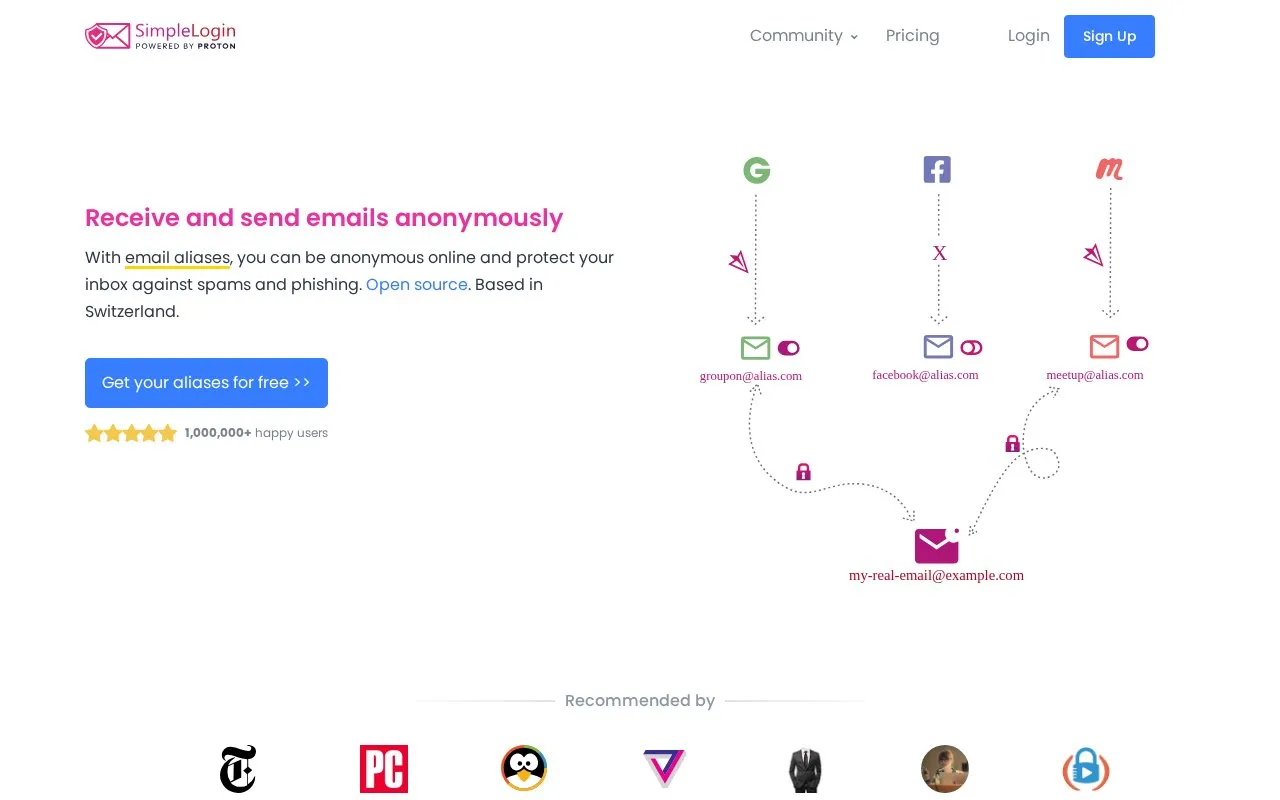
SimpleLogin offers open-source email aliases for receiving and sending messages anonymously, with protection against spam and phishing.
About SimpleLogin
SimpleLogin provides email aliases that forward mail sent to the alias to your inbox. You can reply to forwarded messages or send new messages from the alias, so recipients see the alias address.
It supports custom domains with catch-all addresses, subdomain addresses for creating aliases on the fly, use with multiple mailboxes, PGP encryption before forwarding, and account login with TOTP or WebAuthn. Aliases can be managed through the website, browser extensions for Chrome, Firefox and Safari, and apps for Android and iOS.
Key features
- Forward incoming mail from aliases to your inbox
- Reply to forwarded mail from the alias address
- Send new messages directly from an alias
- Use a custom domain with catch-all aliases
- Create aliases on the fly using a subdomain
- Encrypt forwarded mail with your own PGP key
Best for: People who want to use separate addresses for online accounts and newsletters without sharing their real email address.
Good for
- Aliases work for both receiving and sending mail
- Supports custom domains, subdomains, and multiple mailboxes
- Offers PGP forwarding encryption and TOTP/WebAuthn login options
SimpleLogin at a glance
- Website
- simplelogin.io
- Category
- Privacy & Security › Private Email
- Type
- Website
- Pricing
- Not confirmed. Check the site
- Platforms
- Android, iOS, Web
- Open source
- Not stated
- Language
- English
- Last checked
- Oct 5, 2026 · Online when checked
- Listed
- Oct 5, 2026
SimpleLogin alternatives
Tools and sites you could use instead, ranked by how closely they match.

addy.io creates email aliases that forward to a real inbox, letting users use different addresses for services and disable one if it leaks.

Cloaked creates email and phone aliases plus passwords for signing up to services without sharing real contact information.

Create email aliases that forward to an inbox with Emcognito, then reply privately or suspend an alias.
Free
24 alternatives
SimpleLogin documentation explains how to send email from an alias, including replying to a message received through that address.

Fake Email provides password-free temporary email addresses for anonymous use, with spam protection and an inbox ready for registration messages.
Free
24 alternativesPopular in Private Email
Well-known listings from the same topic.
Send Emailduckduckgo.com/duckduckgo-help-pages/email-pro…Bitwarden Integrationbitwarden.com/help/generatorDuckDuckGo Email Protectionduckduckgo.com/emailTempTomtemptom.comFreetempmailfreetempmail.comForward Emailforwardemail.net


SimpleLogin FAQ
What exactly is an email alias?
An alias forwards mail sent to it to your inbox, and you can also send mail from it, so contacts see the alias as your address.
Why use an alias instead of plus-sign subaddressing?
With plus addressing, replies show your real address as the sender, while replies to forwarded alias mail are sent from the alias.
Is something wrong or out of date?
Tell us and an editor will check it.
Own this website?
Claim this listing
Claim the listing and suggest updates yourself. An editor checks every claim first.