YOGA
YOGA Image Optimizer converts and optimizes JPEG, PNG, and WebP images.
About YOGA
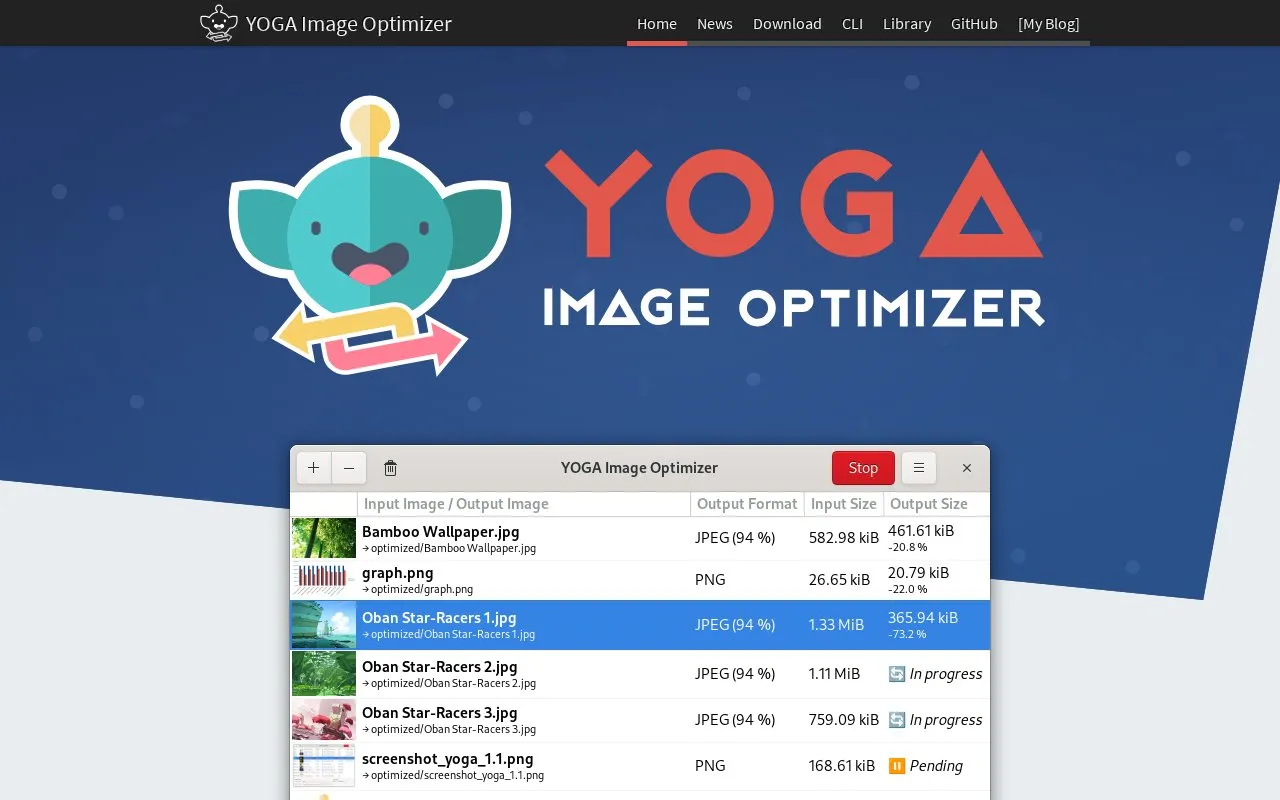
YOGA Image Optimizer is a tool for converting and optimizing JPEG, PNG and WebP image files. Users drag and drop images, click "Optimize", and the tool re-encodes them to reduce file size. It is described on its homepage as free, and is offered as an installable application for Linux and Windows as well as a web version.
Key features
- Drag-and-drop optimization of JPEG, PNG and WebP images
- Converts JPEG to lossy WebP, which can halve file size
- Converts PNG to lossless WebP, saving about 35% on average
- Reports typical savings of about 30% for JPEG and over 20% for PNG
- Available for Linux and Windows, and as a web tool
Best for: People who need to shrink JPEG, PNG or WebP files and want to try WebP conversion without installing specialized encoder tools.
Good for
- Handles optimization and format conversion in one drag-and-drop workflow
- States typical space savings for each supported input format
- Offered on Linux, Windows and the web, and described as free
Watch out for
- Optimization can be slow and RAM-intensive, especially for JPEGs
- Only JPEG, PNG and WebP inputs are mentioned
- Savings on WebP-to-WebP optimization are only a few percent
YOGA at a glance
- Website
- yoga.flozz.org
- Category
- Online Tools › Image Tools
- Type
- Online tool
- Pricing
- Not confirmed. Check the site
- Platforms
- Linux, Web, Windows
- Open source
- Not stated
- Last checked
- Oct 6, 2026 · Online when checked
- Listed
- Oct 5, 2026
Guides for Image Tools
YOGA alternatives
Tools and sites you could use instead, ranked by how closely they match.

RIOT optimizes images with batch processing and live comparison for JPEG, PNG, WebP, and GIF formats.
pingo optimizes PNG, JPEG, WebP, and APNG images using lossless or lossy compression.
SEOPIX compresses, resizes, and optimizes JPEG and PNG images through an online editor.
Free
12 alternatives
Convert JPG, JPEG, and GIF images to PDF online, with options for batch image-to-PDF conversion.
Free

TinyPNG compresses AVIF, WebP, PNG, and JPEG images using a lossy image optimization engine.

TinyJPG compresses WebP, JPEG, and PNG images to reduce file sizes for websites and save bandwidth.
Popular in Image Tools
Well-known listings from the same topic.
CamScannerapps.apple.com/us/app/camscanner-pdf-scanner-a…BeeRefbeeref.orgGreenshotgetgreenshot.orgLightshotapp.prntscr.comnomacsnomacs.orgConverseenconverseen.fasterland.net


YOGA FAQ
Which image formats does YOGA support?
It converts and optimizes JPEG, PNG and WebP files, and can convert JPEG and PNG input to WebP output.
How much space can optimization save?
The homepage states about 30% for JPEGs and more than 20% for PNGs; WebP-to-WebP optimization saves only a few percent, while converting JPEG to lossy WebP can halve the size and converting PNG to lossless WebP saves 35% on average.
Why can optimization be slow?
The JPEG encoder requires about 300 MB of RAM and roughly 3 minutes per megapixel; the PNG and WebP encoders are described as less resource hungry.
Is something wrong or out of date?
Tell us and an editor will check it.
Own this website?
Claim this listing
Claim the listing and suggest updates yourself. An editor checks every claim first.