
PRISM provides weather datasets such as daily precipitation, temperature, drought indicators, and solar irradiance.
Dataset
NOAA's GOES 1–15 instruments measured particles, magnetic fields, and solar irradiance and captured images of the Sun.
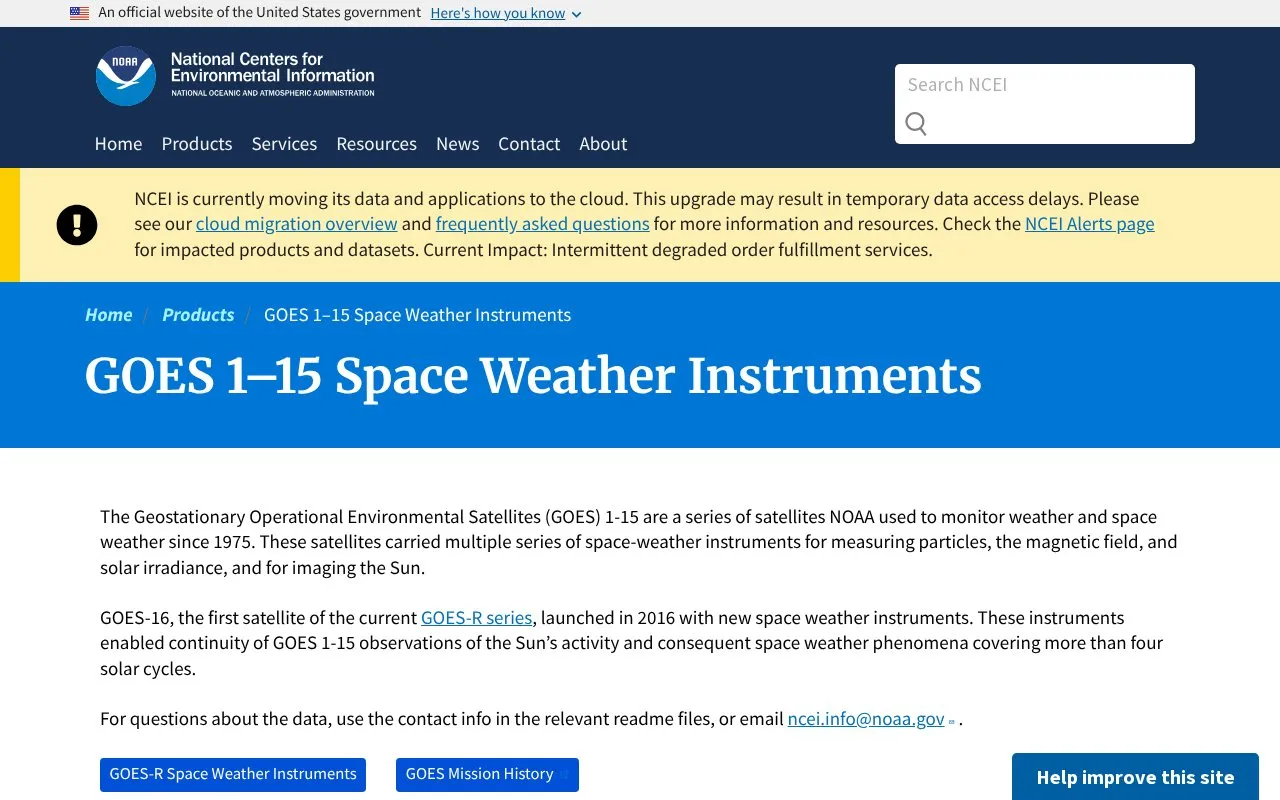
The GOES 1–15 Space Weather Instruments page from NOAA NCEI provides historical space weather measurements from the Space Environment Monitor suite on SMS and GOES 1–15 satellites. It includes particle measurements, magnetic field readings, solar irradiance data, and images of the Sun recorded since July 1974.
The page organizes data by satellite with launch, first-data, last-data, and available-instrument listings, along with documentation and ephemeris sections. Use is affected by temporary NCEI cloud-migration access delays, gaps in irradiance and imaging data around the equinoxes, and possible data anomalies that require corroboration with other sources.
Other listings in Climate & Environmental Data with the most in common.
PRISM provides weather datasets such as daily precipitation, temperature, drought indicators, and solar irradiance.
NOAA Climate Data Online provides free access to historical global weather and climate records, along with station history information.
WASCAL’s research data catalog helps connect data providers, users, and managers through its data infrastructure.
Browse datasets from UC Santa Barbara's Climate Hazards Center, including CHIRPS v3 rainfall data and instructions for bulk downloads.
The Amazon Tall Tower Observatory data portal provides research data from a joint German-Brazilian project in the Amazon.
Search NASA's Atmospheric Science Data Center for Earth science projects on radiation, clouds, aerosols, and atmospheric composition.
Well-known listings from the same topic.
Tell us and an editor will check it.
Claim the listing and suggest updates yourself. An editor checks every claim first.


